About the department
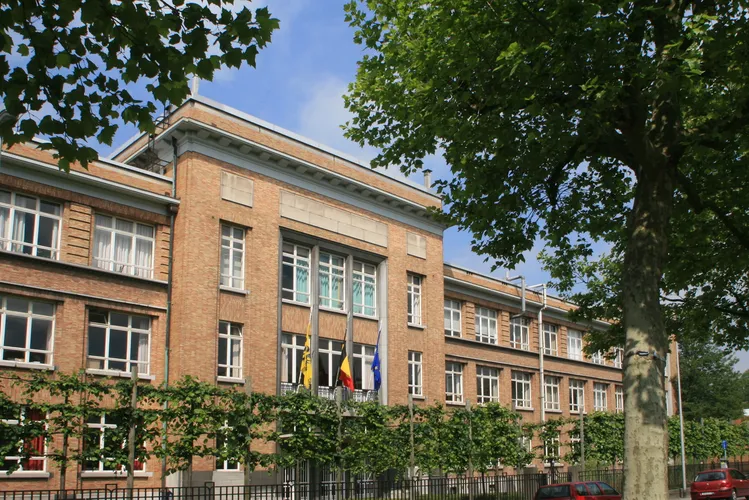
The Department of Agricultural Economics is a part of the Faculty of Bioscience Engineering at Ghent University
The department currently has about 70 staff members, including 8 staff members of the tenured academic staff, 10 staff members of the assisting academic staff, several members of other scientific staff and 5 staff members of the administrative and technical staff.
The current Head of Department is Prof. dr. ir. Marijke D'Haese
Research at the department of agricultural economics (BW27)
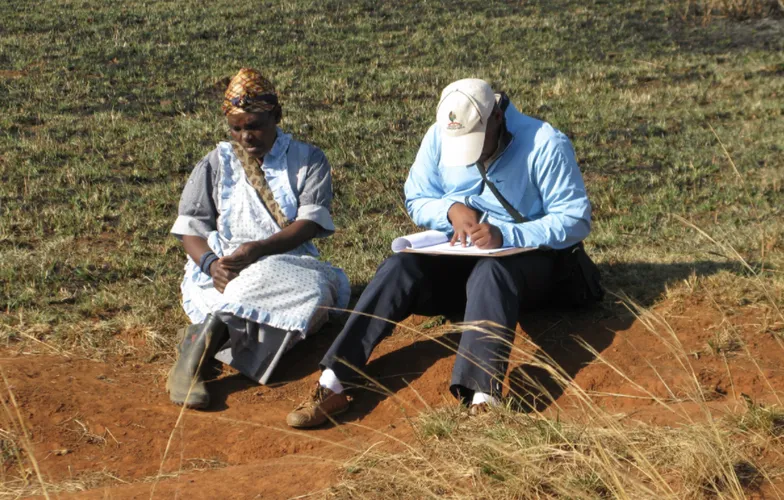
The Department of Agricultural Economics studies social and socio-economic aspects related to food, agriculture and the sustainable use of natural resources. Central to this is the understanding of decision and choice processes of products, consumers, entrepreneurs, users and/or protectors of natural resources and policy makers in agricultural and food chains.
The research is therefore diverse in terms of content, methodology and scope. It includes both quantitative research, based on primary or secondary data, and qualitative and experimental research.
The department opts for a global orientation. The current 55 researchers (early 2020) come from some 20 countries with each of the five continents represented.

A lot of research at the department studies producers and other actors in the food chain. Chain research focuses on strategic chain and network management, and studies e.g. how losses in agricultural and food chains can be reduced or how side streams can be valorized.
In addition, these chains are characterized by strong technological developments. This leads to interesting methodological questions such as how best to measure the acceptability and impact of new technologies at different levels in the chain.
In addition, innovative research methods are being developed at the department that can describe the socio-economic impact of innovations in agriculture and the food sector.
The sensory research contributes to a better understanding of how new products may be accepted.

To unravel the socio-economic complexity of agricultural and food systems, the Department developed several lines of research, from producer to consumer and from field to fork. The research takes place in a complex, multidimensional and rapidly changing context.
Consumers are at the center of research that focuses on agri-food marketing and consumer behavior.
Changes and challenges in consumer behavior are the starting point for research on consumer attitudes, perceptions and choices.
These studies not only examine to what extent consumers are willing to accept innovations in food production, processing and distribution, but also what their motives and barriers are, what their attitude is towards novel foods, and how producers, policy makers and stakeholders in the food chain can respond to this through e.g. communication.

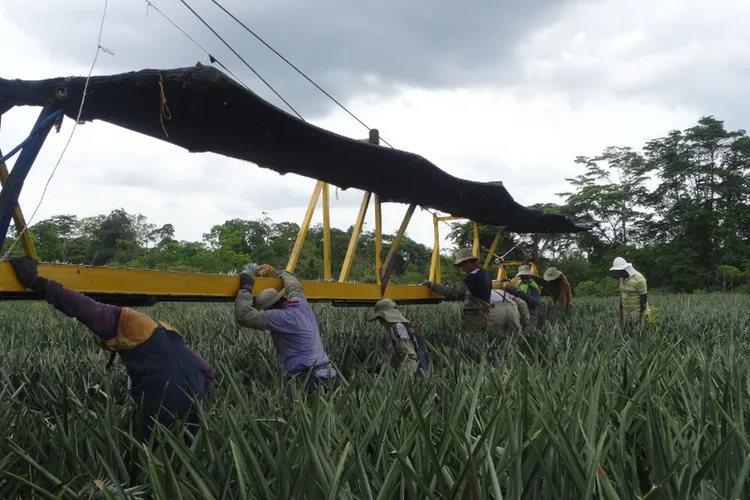
Despite their ever decreasing number and changing role in the chain, farms remain important decision units in food production. Farm economics measures, analyzes, and improves the economic performance of farms.
Through efficiency research and participatory business models, explanations are sought for differences in farm performance.
It studies the role of their internal organization (farm structure, management) and of external factors such as technology, market and policy.
It provides improvement paths to integrate new developments such as precision agriculture, extension and environmental conditions.
The policy environment is also the subject of agricultural and environmental policy analyses that happen at the department. In the agricultural context, this is mainly about reactive nitrogen.
The results provide solutions for reducing the contribution of agriculture to the nitrate pollution of surface waters, as well as to the ammonia problem and the interaction between the two.
Methodologically, this research is mainly based on the application of decision support models from management sciences, combined with detailed data and models of biological porcesses.
This research aims to support entrepreneurs and policy makers based on quantitative models such as optimization models, econometric models or bioeconomic simulations.
The broader social context is also studied. Food systems are embedded in, and influenced by, the social, cultural, economic, political and natural environment.
This complex context is studied in both (peri)rural and urban contexts with both economic and sociological approaches.
The department uses both qualitative and quantitative methods and data.
The research is broad in scope and includes the importance of local knowledge systems, cooperatives and other trade agreements, multistakeholder processes and policy structures, in addition to the influence of institutions on sustainable food systems.
Both in the research in the global south, and in our own regions, there is a constant focus on the vulnerable position of farmers and workers on farms.